Plenary Forum | Accelerating Inclusive Growth:
Youth and Women Empowerment in the
Digital Era and Green Transition
SINGAPORE, September 3, 2026 — During the Second Global Business Summit on
Belt and Road Infrastructure Investment to Accelerate the SDGs, the Plenary Forum
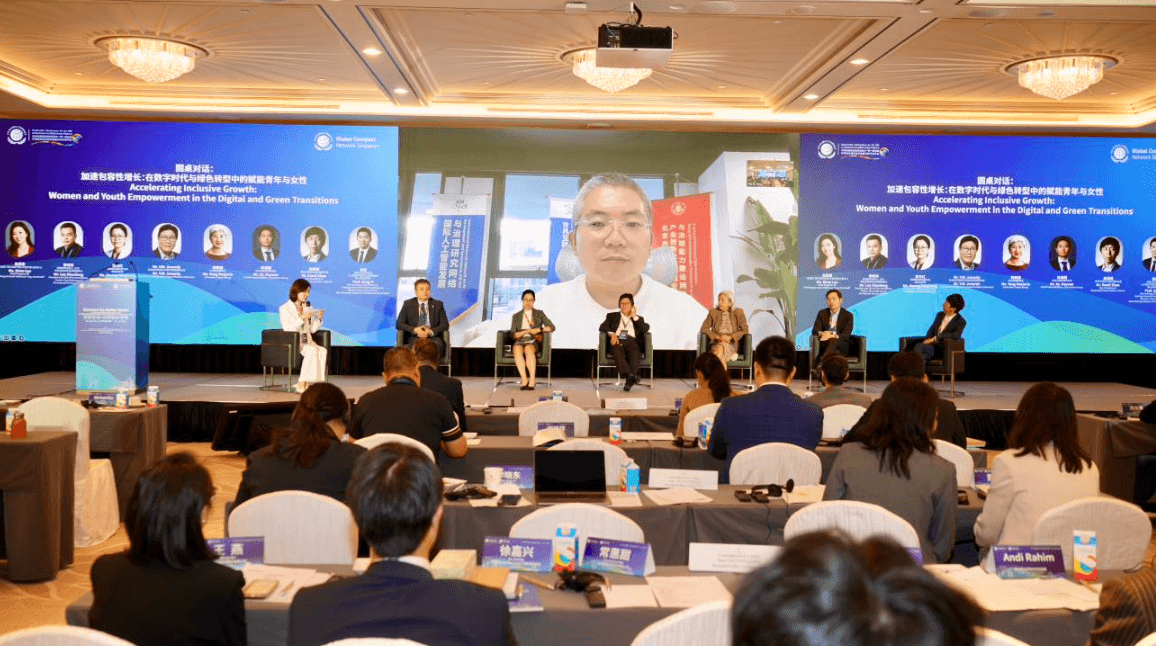
"Accelerating Inclusive Growth: Women and Youth Empowerment in the Digital
and Green Transitions" was held in Singapore. This forum brought together
representatives from UN agencies, academic experts, executives of multinational
corporations, and representatives of social organizations. Centered around the
high-quality development of the Digital Silk Road and Green Silk Road under the
Belt and Road Initiative (BRI), the discussions explored how to unleash the
development potential of youth and women amidst the wave of digital and green
transitions, thereby promoting more universal, inclusive, and sustainable growth
in countries along the routes.
With the overarching theme of "Connectiviy for Better World", this summit closely
adhered to the Belt and Road Initiative's principles of extensive consultation, joint
contribution, and shared benefits. The Eight Major Actions for High-Quality Belt and Road
Cooperation proposed by China explicitly call for promoting green development and
advancing scientific and technological innovation. Currently, the booming
development of the digital economy and green industries has generated a
multitude of new employment and entrepreneurial opportunities, making youth
and women an indispensable stakeholder in the Belt and Road cooperation
process. At the same time, challenges such as the digital divide, the talent skills
gap, algorithmic risks, and supply chain transformation continue to impact the full
and equal participation of youth and women in digital and green development.
Echoing the core vision of "leaving no one behind" of the UN 2030 Agenda for
Sustainable Development, this plenary forum built a multilateral dialogue platform
to explore how businesses can integrate the empowerment of youth and women
into the entire value chain of overseas industrial cooperation, digital infrastructure,
and green transition. The plenary forum was moderated by Simo Lyu, Chief
Producer of Multilingual Youth Talkshow "Hey, the World".
This plenary forum gathered a diverse array of cross-sector guests, covering
representatives from UN multilateral agencies, AI governance scholars, real
economy manufacturing, digital finance, smart hardware, internet platform
enterprises, and social organizations. From the perspectives of global governance,
academic research, industrial practice, and local host countries, they jointly
discussed practical pathways for empowering youth and women in the context of
the digital era and green transition.
Mr. Y.W. Junardy, President of the UN Global Compact Network Indonesia
mentioned in the sharing that for digital and green transformation to truly benefit
young people and women, it's not enough to just train the youth themselves. We
also need to improve teachers and the education system, integrating sustainability,
environmental, and human rights issues into education and skills training
systematically. When multinational companies operate in Indonesia, they should
respect local culture, collaborate with local universities and industry partners –
including Global Compact Network Indonesia, and actively participate in building
local talent, unlocking the potential of young women in the community.
Mr. Xiaodong Li, Founder and Director, Fuxi Institution, Former Vice-Chairman,
Internet Society of China (ISC) noted that in the era of intelligent technology,
digital infrastructure comprises five interdependent components: networks,
computing power, data, energy, and human capabilities; mere hardware
connectivity does not automatically translate into development dividends for
women and youth. Although network coverage in the Asia-Pacific region has
expanded significantly, the region still faces multiple challenges regarding
affordability, energy consumption, and talent capabilities. Moving forward, the
Digital Silk Road must go beyond network construction to foster the joint
development of multi-level capabilities, the collaborative formulation of technical
standards, and the sharing of development value. It must also promote
collaborative governance involving diverse stakeholders—including governments,
businesses, the technical community, universities, and civil society organizations—
to ensure that developing countries, women, and youth become co-builders of
and beneficiaries in the digital economy.
Jiayuan Xu, Chief Financial Officer, FinVolution Group mentioned that: The
expansion of fintech into overseas markets goes beyond merely offering a wider
range of financial products and services; more importantly, it helps local users
build credit, enhance their financial capabilities, and gain greater opportunities for
development. Neither financial inclusion nor the provision of financial services is
the ultimate goal. The true value lies in enabling more people to transition from
simply accessing financial services to gaining opportunities for growth. This is our
understanding of fintech’s global expansion: it is not just about exporting
financial services, but about bringing technological capabilities and development
opportunities to more people and fostering a more robust financial ecosystem
through participation in the development of local financial infrastructure.
In her remarks, Ms. Fanghong Huang, Senior Vice President and Chief
Compliance Officer of Hikvision, noted that the evolution of digital technology
will continue to reshape the relationship between technology and people, bringing
entirely new issues and challenges. For technology companies, the question of our
era is how to drive technological innovation while simultaneously safeguarding
human rights and creating opportunities for development. As a player in this
landscape, Hikvision will continue to refine its responsible governance within its
global operations and seek the optimal balance between technological innovation
and social value—striving not only to be a driver of technology but also a
practitioner of "technology for good."
Ms. Marjorie Yang, Chairman of Esquel Group shared her experiences from both
her academic journey and work in the manufacturing industry. She pointed out
that the biggest obstacle women face in technology and management isn't a lack
of ability, but prejudice. When talking about tech education for teenagers in the
digital age, she emphasized that the core of education isn't just about learning
programming or AI skills, but about empowering young people to gain confidence
in mastering technology. At the same time, she called for breaking stereotypes
about women factory workers, and said companies should pay more attention to
the dual pressures women face balancing work and family, using mental and
physical health support measures to help women extend their career lifespan.
Mr. Ewell Zhao, Vice President of Tencent Sustainable Social Value cited the "S-
Makers" initiative as an example of how technology empowers youth in the AI era
through innovation—encouraging young people to focus on real-world social
issues and helping transform their ideas into practical solutions. He also outlined
the four steps of Tencent SSV’s model of "creating social value through core
capabilities": first, identifying genuine social needs; second, leveraging core
corporate capabilities to find entry points for solutions; third, collaborating with
multiple stakeholders to co-create an ecosystem; and fourth, accumulating
reusable social assets to continuously generate social value and foster sustainable
development.
Prof. Yi Zeng, Wu Yu-Zhang Chair Professor, Gaoling School of AI, Renmin
University of China, and Founding Dean of Beijing Institute of AI Safety and
Governance shared his views from three angles: AI technology going global,
gender equality, and youth AI education. He suggested that applying AI to
developing countries shouldn’t just be about transplanting ready-made models.
It should respect local digital sovereignty, data localization, and cultural values,
and use co-development models to help partner countries build their own AI
ecosystems. On gender issues, he said AI should be used to fully leverage women's
strengths in emotion and artistic creativity, and also called for giving women equal
opportunities in tech, while encouraging men to take a more active role in family
life and share household responsibilities. He also pointed out that adults don’t
need to rush into mapping out rigid AI learning paths for the next generation; truly
forward-looking AI should seamlessly fit into daily life and serve a variety of human
needs.
The host of the forum, Ms. Simo Lyu, Chief Producer of Multilingual Youth
Talkshow "Hey, the World", stated in her summary: In an era where technological
iteration is full of challenges, we should stick to the original intention of using
technology for good and for serving humanity. Fintech, digital products, and
business transformation can't ignore local realities—they need to be designed and
refined around local needs. And being safe and reliable is an essential foundational
principle of digital development, which aligns perfectly with the principles
promoted by the UN Global Compact.
The roundtable panelists widely agreed that advancing the high-quality
development of the Digital Silk Road and Green Silk Road requires a people-
centered approach. The digital revolution and green transition bring tremendous
opportunities for young people and women, but are also accompanied by new
risks and challenges. When conducting overseas investment and business
operations, enterprises should integrate gender equality, youth development, and
local capacity building into their entire business processes, ensuring that the
dividends of development truly benefit local communities.
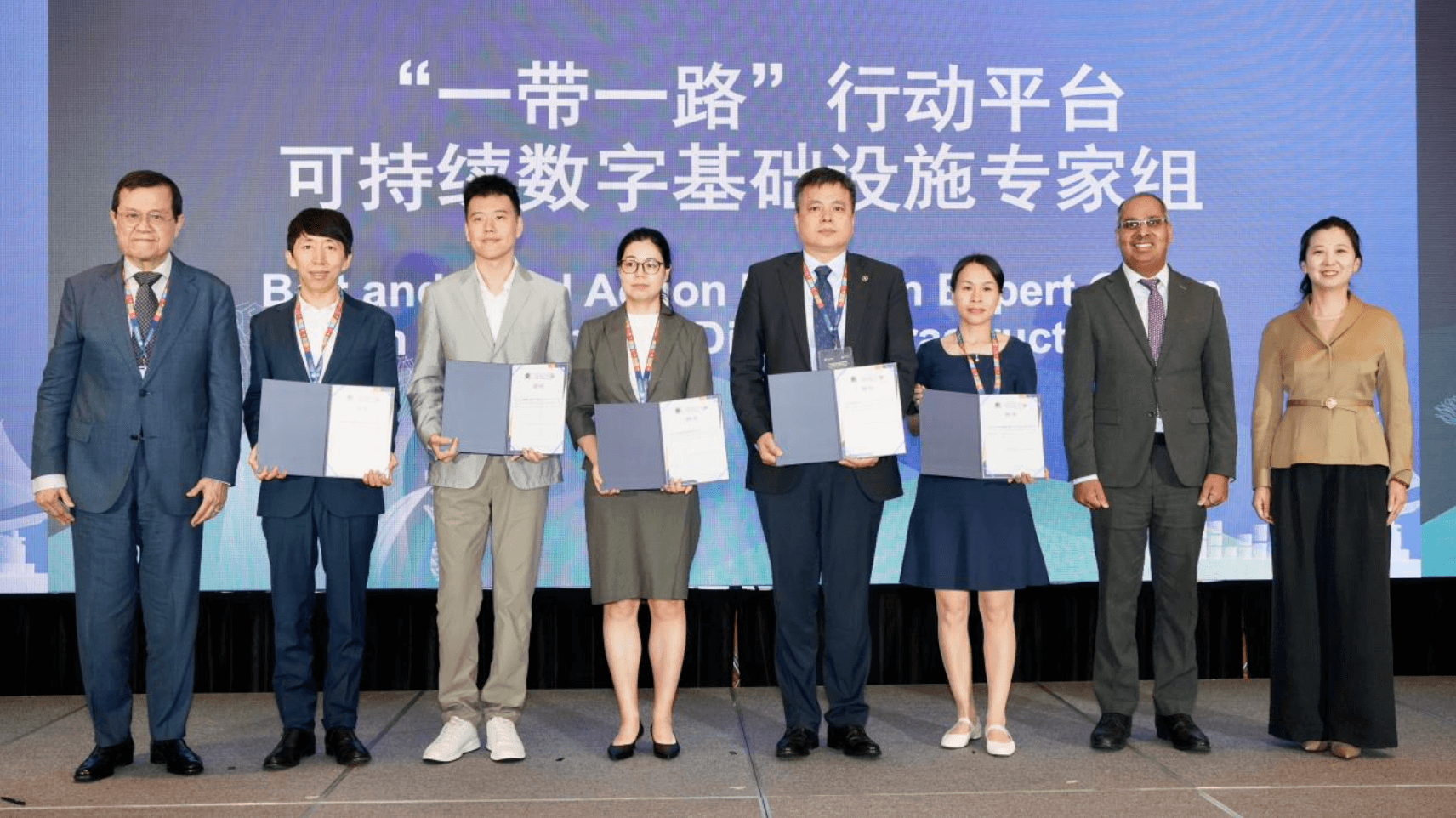
The diverse practices and discussion insights generated from this plenary forum
will also provide an important reference for the newly established “Digital
Infrastructure Expert Working Group” of the UN Global Compact “Sustainable
Infrastructure for the Belt and Road Initiative to Accelerate the SDGs” Action
Platform. The Expert Group will pool the strengths of leading enterprises,
university think tanks, and international organizations to conduct continuous
research on responsible digital infrastructure, AI for Good, digital talent cultivation
in the Global South, and digital inclusion, producing industry tools and joint
initiatives to help build a more sustainable and inclusive Digital Silk Road.
The United Nations Global Compact “Sustainable Infrastructure for the Belt and
Road Initiative to Accelerate the SDGs” Action Platform continues to build a
multilateral cooperation platform for governments, enterprises, academia, and
civil society. It drives companies participating in the Belt and Road cooperation to
practice the Ten Principles of the UN Global Compact, integrates the
empowerment of youth and women and inclusive growth into investment,
construction and business operations, to accelerate the achievement of the
Sustainable Development Goals and promote higher-quality and more inclusive
development of the Belt and Road Initiative.


 中文